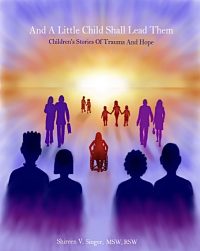
Children have a desire to transform trauma by helping others discover the resilience, optimism and belief for a better life and brighter future. Helplessness and isolation are the core experiences of trauma. Empowerment and reconnection are the core experiences of recovery and post traumatic growth. Trauma is transcended by making it a gift to others (Herman, 1997).
The scant number of published studies with child victims is directly related to the obstacles that limit or prevent research with children who have experienced trauma (Walker, Reid, O’Neill & Brown, 2009). In fact, only one study (Chu, DePrince & Weinzierl, 2008) has addressed the potential benefits of conducting research with children who have experienced interpersonal maltreatment. To date, there has been no research which specifically speaks to both school-aged children residing in the community and their mothers about the child’s experience of domestic violence (Swanston, Bowyer and Vetere, 2014).
There remains a silent void where children suffer their experiences of childhood maltreatment alone and isolated from peers with shared experience and support. Unlike adult survivors who have developed peer support groups to share their journey of healing, recovery and overcoming, children do not know of other children whose courage, strength and hope has empowered them to overcome childhood adversity. This book champions the voices of children to let their lives speak to other children still suffering.
Children have had their voices silenced and their human rights dismissed by adult decision makers in systems of care that most impact them. Prohibition of corporal punishment is still to be achieved in Canada. The Canadian Incident Study of reported Child Abuse and Neglect 2008, the third nationwide study to examine the incident of reported child maltreatment, involved 112 child welfare service agencies in Canada reporting on 15,980 child protection investigations. The study found that nearly three quarters 74% of all cases of “substantiated physical abuse” were cases of physical punishment and 27% of “substantiated emotional maltreatment” incidents were initiated as a form of punishment. In the vast majority 17, 212 of the estimated 16, 688 cases of substantiated physical abuse, physical violence was the primary form of maltreatment. Of the cases of physical violence, 54% involved children being slapped or spanked, 30% being shaken, pushed, grabbed or thrown, 21% being hit with objects and 8% being punched, kicked or bitten (Jud. A & Trocme, N. (2013), Physical Abuse and Physical Punishment in Canada, Child Canadian Welfare Research Portal, Information Sheet #122). Fifty-four countries have joined the United Nations Convention on the Rights of the Child. The presence of S43 of the Criminal Code of Canada which is the section which permits and defines when and how parents can hit their children is in direct conflict with the United Nations Convention (Global Initiative to End All Corporeal Punishment in Children).
The very nature of the legal system may exacerbate conflict as both parents seek to influence a higher authority and enter the arena as adversaries with agendas that have been defined in opposition to one another framing the discourse of winning and losing. The Special Joint Committee on Child Custody and Access published its report, “For The Sake of the Children”, in 1998. Among the many issues the Committee examined was that of high conflict parental relationships. The Committee stated: “Unfortunately, a significant number of divorcing parents become locked in bitter and sometimes violent disputes over custody and access arrangements. These situations are truly dangerous for children”. (Canada, 1998:22)
Corporal punishment, custody and access and many more issues continue to adversely impact children. In Canada, the provision of Child and Youth Advocacy Offices have advanced policies and practices that have created more holistic, coordinated services for children. Children as young as eight are able to powerfully articulate their experiences and needs. They have a voice if only adults would listen (Swanston, Bowyer, Vetere, 2014). Children suggested that being listened to and having their opinion taken into account by services was paramount (Golden 2007).
Children remember their experiences of childhood adversity. Children want to tell their story and have their voices heard by safe, trusted, protective adults who can make the bad, sad, scary things stop. Children want to heal, recover and thrive in a happy, healthy, safe family. When the action of telling the story has come to its conclusion, the traumatic experience truly belongs to the past. Onward and upward from here. Go gently into your future.
15% of the proceeds from book sales will be donated to Seastar Child and Youth Advocacy Center, Halifax, NS.